
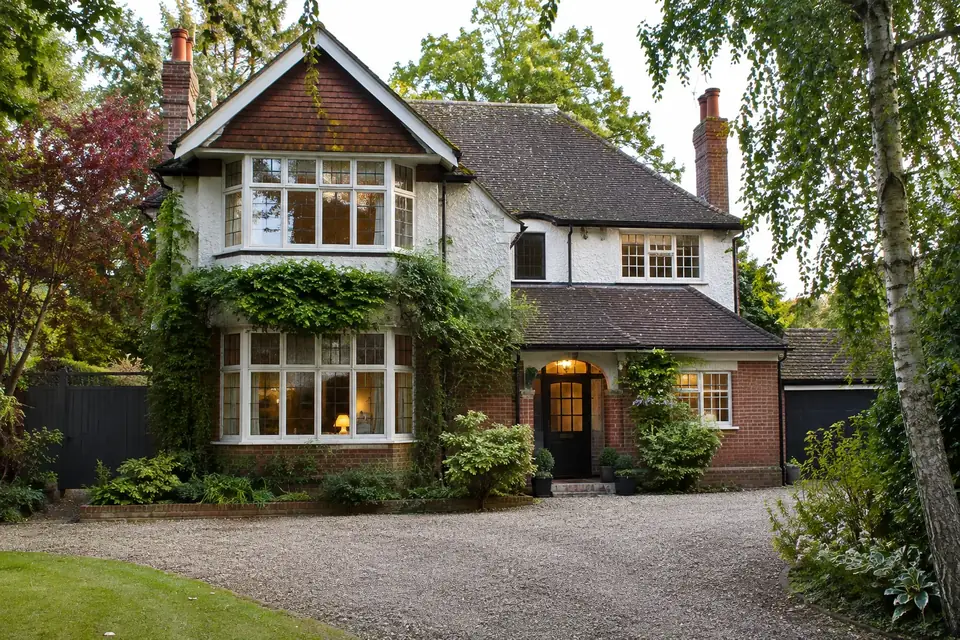
Bridging loans
£509,000Bromley
More time to sell, without monthly interest payments
An 18-month second-charge facility replaced an expiring bridge.
Read the case studySpecialist property finance
Release equity from your property without disturbing your existing mortgage. Arranged by a specialist broker since 2004.

Need to raise capital quickly but don’t want to remortgage away from a competitive first charge deal? A second charge bridging loan sits behind your existing mortgage, letting you unlock the equity in your property while your current arrangement stays exactly where it is. We source second charge bridging finance from our panel of 300+ lenders, structured around your timescale and your exit.
Lenders on our panel typically offer:
In most cases, your existing mortgage lender must give consent before a second charge can be registered against the property. Some high street lenders grant this routinely; others are slow or refuse as a matter of policy.
This is a detail that catches out borrowers who go direct, and it’s one we deal with every week. We confirm the consent position at the very start of the process, and where consent is refused or would take too long, lenders on our panel can offer equitable charge structures, subject to the existing mortgage terms and legal advice. It’s a specialist corner of the market, and knowing which lenders will run with an equitable charge, and at what price, is precisely the kind of granular knowledge you won’t find with a Google search.
Property investors, developers and business owners use second charge bridging finance when they need capital fast and their equity is tied up in mortgaged property. Common scenarios include:
If your existing mortgage is on a competitive rate, or carries heavy early repayment charges, a second charge bridge lets you get at your equity without disturbing it.
A second charge bridging loan is a short-term loan secured against a property that already has a mortgage or another loan registered against it. Your existing lender keeps the first legal charge; the bridging lender registers a second charge behind them at HM Land Registry.
Because the second charge lender sits behind the first, they are repaid second if the property is ever sold or repossessed. That extra risk is reflected in the pricing, second charge bridging rates typically run slightly higher than an equivalent first charge loan, but for many borrowers the numbers still stack up comfortably, because:
| Feature | First charge bridging | Second charge bridging |
|---|---|---|
| Security position | Lender holds the first legal charge | Lender ranks behind your existing mortgage |
| Typical rates | From 0.65%–0.89% per month | From around 0.85% per month |
| Maximum LTV | Up to 75% (up to 100% of purchase price in some structures) | 70% combined across both charges |
| Existing mortgage | Repaid or not present | Stays in place, untouched |
| Consent required | No | Usually — from your first charge lender |
If you own the property outright, a first charge bridge will almost always be cheaper and simpler. But where a mortgage is already in place and you want to keep it, the second charge route is usually the more cost-effective way to release equity.
Lenders on our panel will typically consider:
We arrange unregulated bridging finance only, for business and investment purposes. If you or a family member live in (or intend to live in) the security property, the loan would be regulated by the FCA and we are unable to assist, you should speak to an FCA-authorised adviser.
Typical lender requirementsCredit profile is particularly important for second charge lending. Missed payments on the existing mortgage behind which the proposed second charge would sit will almost certainly lead to a decline.
Second charge bridging loan rates from lenders on our panel start from around 0.85% per month, depending on the strength of the case. As a rule of thumb, expect a second charge bridge to price around 0.10% – 0.30% per month above an equivalent first charge loan on the same property, that premium is the cost of the lender’s weaker security position.
The main factors that drive your rate are:
The second charge bridging market is smaller and more specialised than the first charge market, and appetite shifts constantly. Some lenders love second charges; many won’t touch them; and pricing for the same deal can vary dramatically from one week to the next.
With a panel of 300+ bridging and development finance lenders, we make it our mission to guide our clients through this corner of the financial maze. Using us means:
Lenders on our panel offer second charge bridging loans from £100,000 with no fixed upper limit. The amount you can raise is driven by the equity in your property: most lenders will go to 70% combined LTV, so if your property is worth £1m with a £400k mortgage, you could typically raise up to £300k.
Typically within 2–4 weeks, but where the need is urgent, funds can be available in days, particularly where an AVM (automated valuation) can be used in place of a physical valuation and the first charge consent position is straightforward.
Yes, modestly. Because the lender ranks behind your existing mortgage, rates typically sit 0.10%–0.30% per month above an equivalent first charge loan. But compared with the cost of breaking a competitive fixed-rate mortgage and refinancing the entire debt, a second charge bridge is often significantly cheaper overall.
Usually, yes, most second charge lenders require consent from your first charge lender before registering their charge. Where consent is refused or delayed, lenders on our panel can offer equitable charge structures, subject to the existing mortgage terms and legal advice. We confirm this at the start of every case.
Not necessarily. Most lenders on our panel allow interest to be retained, meaning nothing is paid until the loan is redeemed. You continue paying your existing mortgage as normal.
Adverse credit is more difficult to accommodate with second charge bridging than with first charge lending. Credit profile carries greater weight, and missed payments on the mortgage behind which the second charge would sit will almost certainly lead to a decline.
The most common exits are the sale of the security property (or another property), a refinance onto a term mortgage, or a defined business event such as the sale of completed development units. A clear, evidenced exit is the single biggest factor in securing a competitive rate.
Second charge bridging for business and investment purposes is unregulated, and this is what Tiger Financial arranges. If the security property is your home, the loan would be FCA-regulated and you should speak to an FCA-authorised adviser.
Bridging loans
£509,000Bromley
An 18-month second-charge facility replaced an expiring bridge.
Read the case study
Bridging loans
£175,500Near Newquay
Second-ranking security supported a capital raise on a let barn conversion.
Read the case study
Bridging loans
£172,250Derbyshire
A lender accepted the seller’s second charge from the outset.
Read the case studyLet’s talk property
Get in touch now
We respond within one business hour.
Monday–Friday, 8am–6pm.