
Development finance
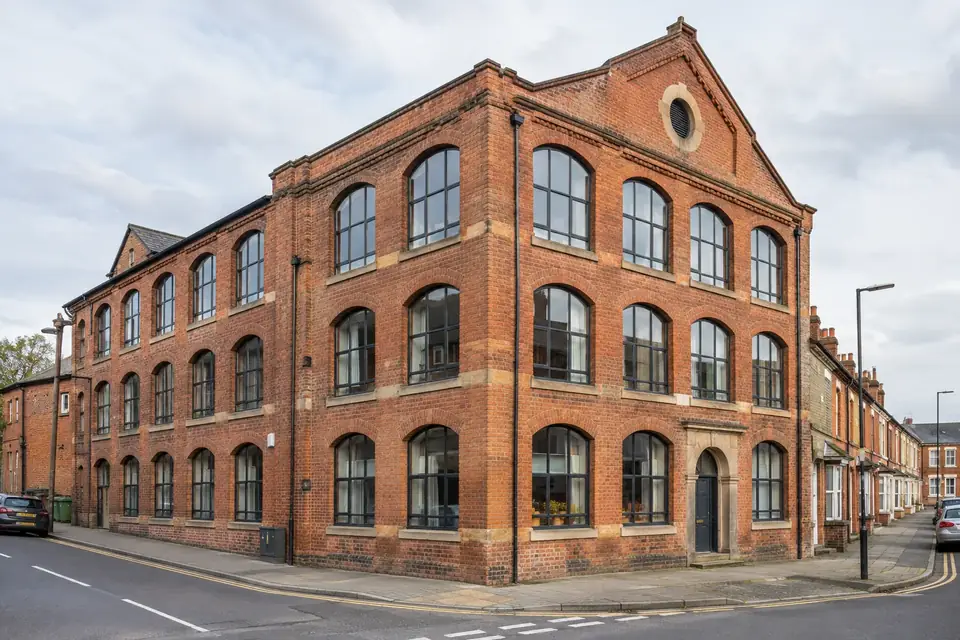
£13m to convert a Grade II listed Northampton shoe factory into 128 apartments in two phases
Two phases of funding for a complex listed-building conversion.
Lenders: phase one, an institutional specialist property lender, the real estate lending arm of an investment manager; phase two, a specialist short-term development lender
The situation.
A Victorian boot and shoe factory in Northampton's Boot and Shoe Quarter had stood empty since the 1990s. The three-storey brick building is Grade II listed and sits in a conservation area. Planning consents to convert it had been granted to previous owners as far back as 1998, and none had been built.
A developer and a joint venture partner agreed to buy the site and deliver the conversion through a new company set up for the project. The scheme was 89 apartments across two connected blocks:
- the main factory building, 46 apartments
- the adjoining block on the neighbouring street, 43 apartments
- 18 studios, 59 one-bedroom and 12 two-bedroom apartments in total
- about 48,500 sq ft, with ground-floor parking
The problem.
The developer needed one lender to fund both the purchase and the whole build. Several features of the project narrowed the field:
- Listed building risk. Converting a listed factory that has been derelict for over two decades carries cost uncertainty. The condition of brickwork, roof and structure is only fully known once work starts, and every alteration needs listed building consent.
- Planning running alongside the purchase. Consent for part of the scheme was going through planning committee while the funding was being arranged, so the lender had to underwrite before the planning position was final.
- A new borrower and a related contractor. The borrowing company was newly formed, and the build was to be carried out by the developer's own contracting business, not an independent main contractor.
- Small units in a regional market. The apartments averaged about 474 sq ft, with an average price of under £150,000. The lender needed to be confident that 89 similar units would sell or let in one town.
The solution.
Tiger Financial took the scheme to an institutional lender with the appetite and balance sheet for a heavy listed conversion of this size, and obtained credit-backed terms before the application went in. The application was then built to answer each concern in turn:
- Delivery. A schedule of the contracting team's 11 previous projects, including a 27-apartment restoration in central London and earlier factory conversions in Northamptonshire. This showed that the related contractor had done this type of work before.
- Financial strength. A letter from the joint venture partner's accountants confirming cash reserves available to the project, well above the equity required. This gave the lender comfort that cost overruns on a listed building could be met.
- Numbers. A full development appraisal and cash flow, with a 10% contingency in the build budget and practical completion programmed for month 18 of a 24-month term.
- Control. The lender took a first charge, a debenture, a limited guarantee and an assignment of the build contract with step-in rights, which dealt with the related-contractor point.
The facility completed in March 2022 at £9,112,800. It funded a large part of the £3m purchase price and the construction costs, with interest rolled up so that nothing was payable until the apartments were finished.
Phase two: the building next door.
With the main conversion on site, the same developer agreed to buy the adjoining Grade II listed factory building for £1.7m. It already had planning permission and listed building consent for 39 apartments, mostly studios and one-bedroom units.
The first lender's facility was tied to the 89 apartments, so the second building needed its own loan in a separate company. Tiger Financial arranged this with a specialist development lender, and it completed in December 2023, while phase one was still being built. The case to that lender was simple: the same team was already delivering the same type of conversion on the other side of the wall, with planning already in place. The funding was structured as a senior loan with a mezzanine loan on top, both from the same lender. The mezzanine piece reduced the cash the developer had to put in while its capital was still tied up in phase one. The senior loan was £3,777,577 and the mezzanine loan £166,519, a total of £3,944,096, which funded the purchase and the conversion works.
The result.
Work on the main factory started in the month the first loan completed. After a two-year conversion it reopened as 89 apartments, bringing one of the town's best-known derelict landmarks back into use for the first time since the 1990s. The adjoining building has since been converted into a further 39 apartments. Across the two phases, Tiger Financial arranged £13m of funding for 128 new homes on one street.
Rates, terms and lending decisions shown relate to this transaction. They are not current offers or a guarantee of funding for another project.